From Basics to AI: A Complete Computer Learning Journey for Classes 1–8
- School Leaders
- March 6, 2026
- VOLT Learning
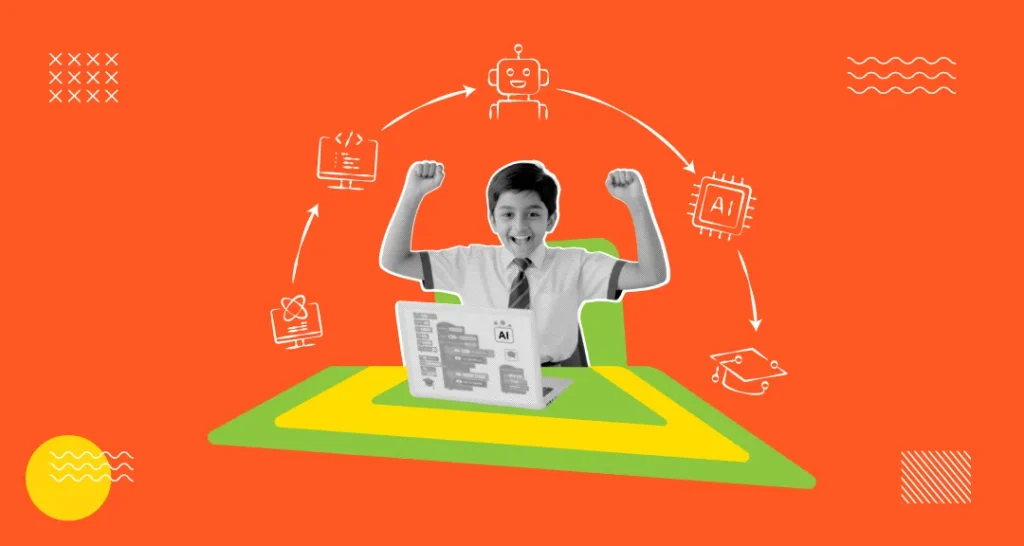
Technology is no longer an optional skill. It is the operating system of modern life.
It influences how children learn, communicate, and solve problems. However, exposure to devices alone does not build digital competence. Schools need a well-planned computer science curriculum for schools that progresses logically from foundational skills in primary classes to coding and AI awareness in middle school.
A thoughtfully designed computer education programme for primary and middle school students ensures that learners move from basic digital literacy to structured computational thinking. When aligned with the NEP 2020 computer curriculum and NCF 2023 framework, this journey prepares students not just to use technology — but to understand and create it.
Let us explore how a complete computer learning pathway from Classes 1–8 builds future-ready learners.
Foundational Stage (Classes 1–2): Early Digital Literacy and Scratch-Based Coding
The computer learning journey for Classes 1–8 begins at the Foundational Stage, where curiosity is at its peak and learning is experiential.
At this level, computer education is designed to build comfort, confidence, and creativity. Students are introduced to the basic components of a computer, simple operations, and responsible digital behaviour. However, learning does not stop at awareness.
Coding begins from Class 1 itself through visual, block-based platforms such as ScratchJr. Instead of text-heavy programming, children use intuitive drag-and-drop commands to create stories, animations, and simple sequences. This playful introduction to coding develops logical sequencing, pattern recognition, and structured thinking at an age-appropriate level.
Structured computer education at the foundation stage nurtures:
- Early computational thinking
- Logical flow of instructions
- Creativity through digital storytelling
- Responsible digital habits
By introducing Scratch-based coding in Classes 1 and 2, schools ensure that problem-solving becomes a natural part of early learning rather than a later academic burden.
Preparatory Stage (Classes 3–5): Strengthening Logic and Digital Application
During the Preparatory Stage, students transition from guided exploration to structured application.
The computer science curriculum for schools at this level deepens digital understanding. Learners explore word processing, presentations, file organisation, and structured digital tasks. They begin to understand how systems process instructions and how structured steps lead to predictable outcomes.
Coding exposure continues in an age-progressive manner. Students move from introductory block-based programming to more advanced logic-building exercises. The focus remains on developing computational thinking without overwhelming learners.
At this stage, students begin connecting digital tools with academic subjects. Technology becomes a medium for expression, analysis, and presentation. A well-designed CBSE computer curriculum supports interdisciplinary learning, reinforcing analytical and problem-solving abilities.
The Preparatory Stage builds the intellectual bridge between foundational coding exposure and formal programming in the next phase. It strengthens confidence while preparing students for more structured coding languages.
Middle Stage (Classes 6–8): Structured Programming, Python, and Emerging Technologies
The Middle Stage, as defined by NEP 2020, emphasises conceptual clarity, critical thinking, and experiential learning.
At this stage, students are ready for formal programming exposure. Coding evolves from block-based logic to structured text-based languages such as Python. Introducing Python for school students enables them to understand algorithms, write basic programs, debug errors, and build structured solutions.
Learning programming in Classes 6 and 7 strengthens analytical reasoning and independent problem-solving. Students begin to recognise how websites, applications, and digital platforms are built. They move from guided coding activities to structured program creation.
By Class 8, the curriculum expands to include emerging technologies such as Artificial Intelligence. Students are introduced to AI fundamentals, real-world applications, and ethical considerations. This progression aligns with the NEP’s emphasis on skill development and future readiness.
The Middle Stage represents the most transformative phase in the complete computer learning journey for Classes 1–8. Students are no longer just learning how to use technology — they are learning how technology works.
Why NEP-Aligned Progression Matters
When computer education follows the NEP structure — Foundational, Preparatory, and Middle — learning becomes developmentally appropriate and cognitively aligned.
Coding from Class 1 through Scratch-based tools builds early logical strength. Structured programming in middle school formalises those skills. AI exposure in Class 8 prepares learners for higher-level academic pathways.
This spiral progression ensures that computer education is not fragmented. Instead, it evolves naturally with the child’s intellectual growth.
AI Education in Schools: Preparing Students for the Future (Class 8)
Artificial Intelligence is shaping industries, careers, and daily life. Integrating AI education in schools ensures that students understand emerging technologies early.
At the Class 8 level, students are introduced to foundational AI concepts, real-life applications, and ethical considerations. This exposure builds awareness without overwhelming learners.
A future-ready computer science curriculum for schools must include AI literacy to align with global technological trends. Understanding how intelligent systems function fosters critical thinking and responsible digital citizenship.
When AI concepts are introduced within a structured computer learning journey for Classes 1–8, students gain confidence in navigating complex technologies.
Experiential Learning in the Computer Science Curriculum
A strong computer education programme for Classes 1–8 goes beyond theory.
Project-based learning ensures that students apply what they learn. Practical assignments, structured tasks, and real-world simulations enhance retention and deepen understanding.
Experiential learning aligns directly with the NEP 2020 computer curriculum, which emphasises competency-based and skill-driven education.
By integrating projects at every stage — from primary activities to middle school coding challenges — schools ensure measurable learning outcomes.
Blended Learning and Digital Resources in Computer Education
Modern computer education must reflect blended learning models.
A well-designed computer science curriculum for schools integrates digital resources, interactive tools, and continuous assessment mechanisms. This supports both classroom instruction and independent practice.
Blended learning enhances concept clarity and allows teachers to track competency development effectively. It also aligns with national reforms encouraging skill-based evaluation rather than rote memorisation.
For schools seeking the best computer book for Classes 1–8, integration of digital support is a key consideration.
Alignment with NEP 2020 and CBSE Computer Curriculum
The NEP 2020 computer curriculum framework promotes critical thinking, digital literacy, experiential learning, and interdisciplinary integration.
A structured computer learning journey for Classes 1–8 aligns naturally with these objectives by:
- Building competencies progressively
- Encouraging analytical reasoning
- Promoting ethical technology use
- Supporting formative assessment
Schools following a progressive CBSE computer curriculum ensure that students are prepared for higher-level STEM education and future academic pathways.
Why Schools Need a Structured Computer Learning Journey for Classes 1–8
Fragmented computer teaching often leads to repetition or skill gaps. A spiral and progressive approach ensures continuity and coherence.
When schools adopt a structured computer science curriculum for Classes 1–8, students develop:
- Digital fluency
- Logical reasoning
- Coding confidence
- AI awareness
- Ethical responsibility
The long-term result is digital empowerment — not just digital familiarity.
Frequently Asked Questions (FAQs)
1. What is the ideal computer learning journey for Classes 1–8?
An ideal computer learning journey begins with digital and coding basics in primary classes and progresses to higher coding and AI awareness by middle school.
2. When should coding be introduced in schools?
Coding for middle school students (Classes 6–7) is ideal, with gradual logical preparation in earlier grades.
3. Is AI education important for school students?
Yes. AI education in schools builds awareness of emerging technologies and prepares students for future academic pathways.
4. How does NEP 2020 impact computer education?
The NEP 2020 computer curriculum promotes competency-based, experiential, and skill-focused learning, aligning with structured computer programmes from Classes 1–8.
Share On: