What Parents Should Never Say Before Exams (And What to Say Instead)
- Parenting
- July 10, 2026
- Saloni Sacheti
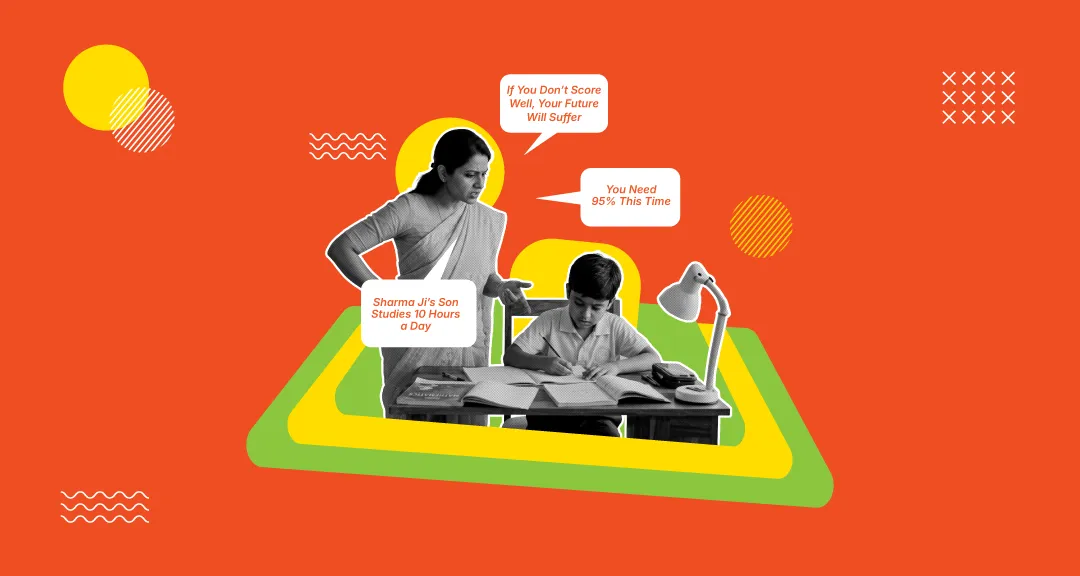
Exam season. Just those two words are enough to change the atmosphere of an entire household.
The study table gets cleared. The phone gets taken away (or at least that’s the plan). The TV volume goes down. And somewhere in the middle of all this, a well-meaning parent says something that — without realising it — makes everything just a little bit harder for their child.
This blog is not about blaming parents. Most of what we say during exam season comes from love, worry, and a desire to do the best for our children. But sometimes, the way we say things matters more than what we actually mean. During exams, children are already under high stress; they don’t need more pressure at home. They need parental support that actually feels like support.
So let’s talk about it — honestly, practically, and without any judgement.
Why Words Matter More During Exam Season
The Hidden Impact of Everyday Comments
Here’s something worth thinking about: your child already knows exams are important. They know it from teachers, from their school planner, and from stressed friends. They can feel the weight of it. So when parents repeatedly remind them — “Have you studied?” “Only X days left!” — it doesn’t motivate them. It stacks more anxiety on top of what’s already there.
Research consistently shows that stress and performance have a complicated relationship. A little pressure can sharpen focus. Too much of it, however, shuts the brain down. Children under high emotional stress find it harder to recall information, think clearly, and stay calm during exams. That’s not laziness. That’s biology.
Positive communication strategies at home are one of the simplest, most powerful tools parents have — and they cost nothing.
Understanding the Pressure Today’s Students Are Already Carrying
Before we judge a child for seeming “unbothered” or “not serious enough,” let’s understand what a typical exam season actually looks like for them:
- School assessments running back-to-back
- Coaching classes or tuition in the evenings
- Classmates comparing scores and study hours
- Social media shows everyone else supposedly studying harder
- A constant, quiet fear of disappointing the people they love most
That last one? That one weighs the heaviest. Exam anxiety in students is real, and much of it is built not in classrooms — but in conversations at home.
Things Parents Should Stop Saying Before Exams
Let’s get into the actual phrases — the ones most of us have said or heard. Each one comes with a “why it hurts” and, more importantly, what to say instead.
1. “If You Don’t Score Well, Your Future Will Suffer”
This one feels motivating to say. It does not feel motivating to hear.
For a child, this creates what psychologists call catastrophic thinking — the mental spiral where one bad exam = failed life. It’s fear-based motivation, and it works only until it breaks down completely, which it eventually does.
Say instead: “Focus on what you can control today. Give it your best, and we’ll figure out the rest together.”
This shifts the focus from an imaginary scary future to the present moment — exactly where their attention needs to be.
2. “Sharma Ji’s Son Studies 10 Hours a Day”
Ah. The classic. Comparison might be the most counterproductive form of parental motivation ever invented. And yet, almost every Indian family has used it at least once. The problem is — when children hear this, they don’t think “I should study more.” They think, “I’m not good enough.” There’s a big difference.
Say instead: “Let’s focus on your progress. What do you feel prepared for? What needs a bit more time?”
Helping children during exams starts with seeing them as individuals, not competitors in a race they didn’t sign up for.
3. “You Need 95% This Time”
A specific target sounds practical. But when it’s imposed from outside rather than set by the child, it becomes a source of performance anxiety rather than a goal. The moment a child starts studying to avoid disappointment rather than to learn, something important breaks down.
Say instead: “Let’s focus on consistent effort and real improvement. That matters more than any single number.”
Reducing student anxiety sometimes means consciously letting go of the marks conversation — at least during exam season itself.
4. “Stop Taking Breaks and Just Study”
Rest is not the opposite of studying. Rest is part of it.
The brain consolidates memory during breaks and sleep. Children who study in focused intervals with regular breaks often retain more than those who sit at their desk for six hours straight but absorb very little. This is not a new finding — it’s well-established in learning science.
Say instead: “Take a proper break, eat something, and come back fresh. You’ll study better for it.”
5. “You Always Leave Everything Until the Last Minute”
The word “always” is doing a lot of damage here. Blanket statements like this don’t describe a situation — they describe a person. And when children are told often enough that they’re careless, irresponsible, or lazy, they start to believe it. It becomes a label they carry into the exam hall.
Say instead: “Okay, let’s see where we are and how to use the time we have well.”
Problem-solving is parental support. Labelling is not.
6. “Don’t Make Silly Mistakes”
This is said with the best intentions. It lands as an instruction to be afraid. When a child walks into an exam thinking “Don’t make silly mistakes, don’t make silly mistakes” — guess what increases? The chances of making silly mistakes increase because their brain is in a state of fear rather than focus.
Say instead: “Read each question carefully, trust your preparation, and take your time.”
That’s the same message, delivered in a way that actually helps.
7. “We’re Spending So Much on Your Education”
This one is particularly painful because it’s usually said in a moment of frustration — not cruelty. But what a child hears is: your love for me comes with a price tag. Tying academic performance to financial sacrifice creates guilt, not gratitude. And guilt is one of the worst possible states for a child trying to concentrate.
Say instead: “We’re proud of the effort you put in. That’s what matters to us.”
Exam stress management at home begins with making sure children know their worth is not tied to their marks.
Recommended reads for you and your kids for better Exam Prep:
What Children Actually Need to Hear Before Exams
If the previous section was about what to stop, this one is about what to start doing.
Reassurance Instead of Pressure
Children need to hear:
- “You’ve put in the work. Trust it.”
- “One exam does not define you or your future.”
- “Whatever the result, we’re on your side.”
These aren’t empty words. To an anxious child, they are anchors.
Encouragement Instead of Evaluation
There’s a meaningful difference between evaluating a child (“Did you finish the syllabus?”) and encouraging them (“You’ve been really disciplined this week — I’ve noticed.”).
Encouragement builds the growth mindset that makes children resilient learners — not just for this exam, but for every challenge ahead. Positive communication strategies during exam season plant seeds that grow long after the marksheet has been forgotten.
Practical Ways Working Parents Can Support Children During Exams
For working parents — and most parents today are — exam season comes with a specific kind of guilt: I’m not around enough. Am I doing enough?
The good news is that the quality of support matters far more than the quantity of time. Here’s what actually helps:
Suggested Read:
1. Create Predictable Routines
Children function better when they know what to expect. A consistent sleep schedule, regular meal times, and a loose study timetable reduce decision fatigue and create stability. You don’t have to micromanage — you just have to make the structure reliable.
2. Be Available Even When You’re Busy
You don’t need hours. You need intention.
A five-minute check-in after dinner — “How are you feeling about tomorrow’s exam?” — with your phone face down means more than a two-hour study monitoring session. Device-free, distraction-free, just listening.
Parental support during exams doesn’t always look like sitting with a textbook. Sometimes it looks like sitting with your child, asking nothing, just being present.
3. Focus on Emotional Wellbeing
Watch for signs that exam pressure is becoming too much — a child who is quieter than usual, isn’t eating well, or seems irritable over small things may be struggling more than they’re showing.
Check in on how they’re feeling, not just how they’re performing. The two are connected, but the first one matters more during the exam season itself.
4. Celebrate Effort, Not Just Results
When your child sits down to study every evening despite being tired, acknowledge it. When they make their own revision notes or manage their time well, say something. These habits are worth celebrating because they’re the foundation of long-term academic success, not just this exam.
Creating a Calm Home Environment During Exams
The home environment is something parents have real control over — and it has a greater impact on children during exams than most people realise.
- Reduce unnecessary noise and chaos. Loud arguments, tense discussions, family drama — children absorb all of it even when they’re in their room with the door closed.
- Avoid constant conversations about marks and ranks. Once you’ve helped your child make a study plan, trust the process. Repeated questioning — “Did you finish the chapter?” “How many marks do you think you’ll get?” — increases anxiety without adding value.
- Prioritise sleep and nutrition. Late-night studying that comes at the expense of sleep is one of the most common and most counterproductive exam habits. A well-rested brain outperforms a sleep-deprived one every single time. Make sure meals are regular and wholesome — exam season is not the time to skip lunch because “there’s no time.”
- Model calm behaviour yourself. If you’re visibly anxious about their exams, they will be too. Children are incredibly perceptive. When parents appear steady and confident — not dismissive, but genuinely calm — it communicates: this is manageable. You’re going to be okay.
Is that kind of reducing student anxiety? It starts with you.
When Exam Anxiety Needs Extra Attention
Most children experience some level of stress during exams. That’s normal, and it’s manageable with the strategies above.
But sometimes, exam anxiety goes beyond normal nervousness. Pay attention if your child is showing:
- Frequent headaches or stomach aches with no clear cause
- Disrupted sleep, either unable to fall asleep or sleeping far too much
- Persistent irritability or emotional outbursts
- Panic at the mention of exams
- Loss of appetite over several days
- Crying that seems disproportionate to the situation
These are signs that the pressure has crossed into something that needs more than good communication at home. In these cases, reaching out to your child’s school counsellor — or a child psychologist — is not an overreaction. It’s responsible, attentive parenting. Student mental health during exams is a real area of concern, and seeking support early makes a significant difference.
One Last Thought Before You Go
Here’s something worth sitting with:
Children may forget most of what they studied for their Class 7 unit test. But they rarely forget how they felt during exam season.
They remember if home felt safe or stressful. They remember if they were compared or celebrated. They remember if their parents’ love felt steady — or conditional on their scorecard.
The most lasting form of parental support during exams isn’t about creating the perfect study timetable or finding the best revision technique. It’s about making sure your child knows — without any doubt — that they are more than their marks. That you believe in them. And that whatever happens in the exam hall, they have a safe place to come home to.
When parents lead with encouragement instead of expectation, they give their children something no coaching class can: confidence, resilience, and a genuinely healthy relationship with learning.
And that? That lasts a lifetime.
Frequently Asked Questions (FAQs)
1. How can parents support children during exams?
Parents can support children during exams by creating a calm home environment, encouraging healthy routines, focusing on effort rather than marks, and using positive communication to build confidence.
2. What should parents avoid saying before exams?
Parents should avoid comparisons, threats about the future, excessive focus on marks, and comments that create guilt or pressure. These can increase exam stress and anxiety.
3. How can parents reduce exam stress in children?
Parents can reduce exam stress by maintaining predictable routines, encouraging breaks, ensuring adequate sleep, and reassuring children that their worth is not defined by exam results.
4. What are the signs of exam anxiety in students?
Common signs include difficulty sleeping, frequent headaches, irritability, loss of appetite, emotional outbursts, and excessive worry about exams or results.
5. Why is positive communication important during exam season?
Positive communication helps children feel supported and understood. It reduces anxiety, boosts confidence, and creates a healthier mindset towards learning and assessments.
6. How can working parents help children during exams?
Working parents can help by having regular check-ins, listening without judgement, being emotionally available, and celebrating effort rather than focusing solely on academic performance.
7. How can parents motivate children without putting pressure on them?
Instead of focusing on marks, parents can acknowledge consistency, effort, and improvement. Encouragement and reassurance are often more effective than pressure-based motivation.
Share On:
Written By: